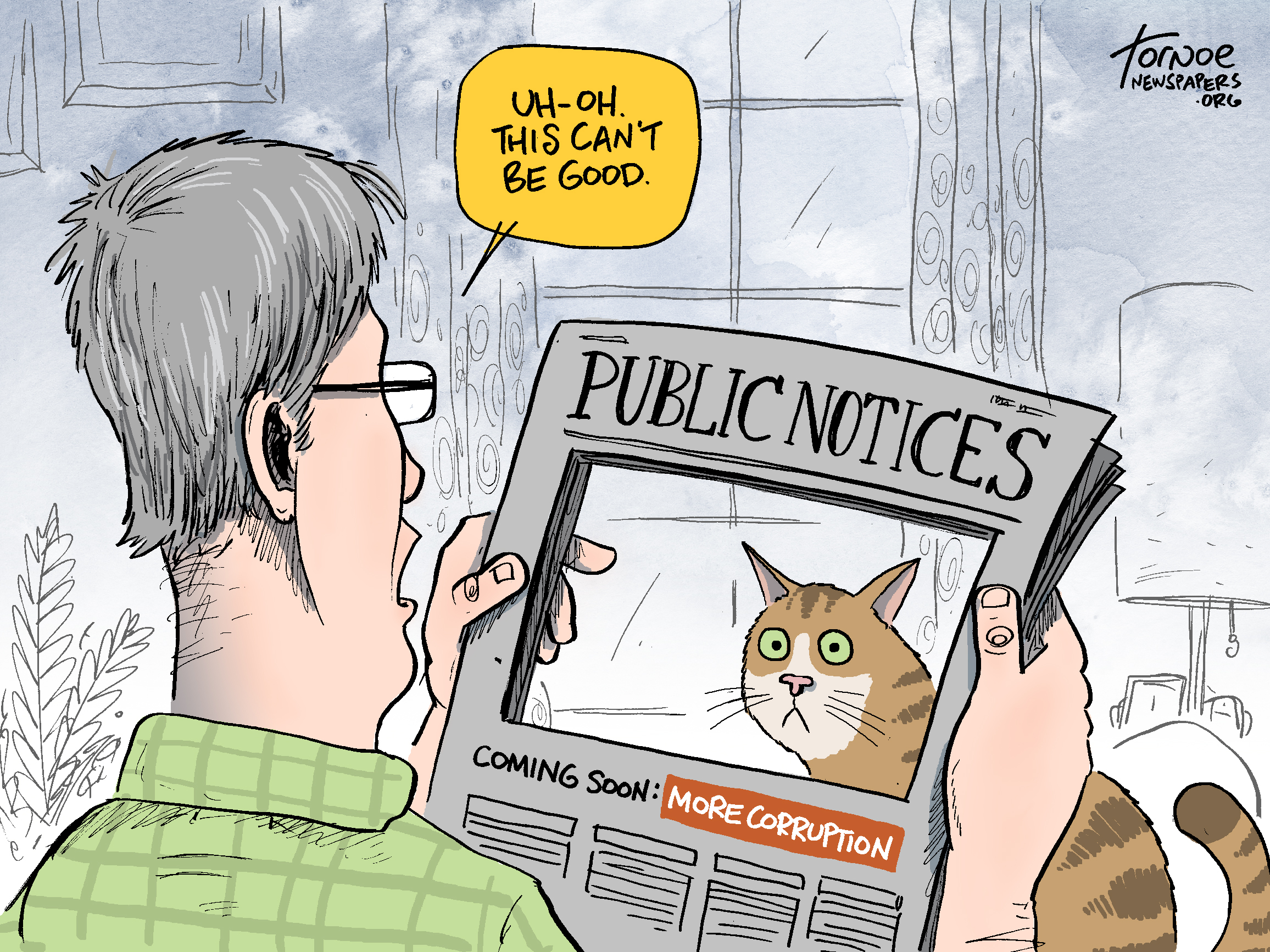
A recently released academic study has found measurable declines in public engagement after local governments were allowed to move legally required public notices from newspapers to government-run websites.
The paper, “Newspaper Notice as a Government Transparency Mechanism: Evidence from Florida,” was authored by researchers from Texas A&M University, the Yale School of Management and INSEAD and released in January 2026. The study provides the first systematic empirical analysis of what happens when a state removes longstanding requirements that public notices be published in newspapers.
Researchers examined the effects of Florida House Bill 7049, which took effect Jan. 1, 2023. The law allowed local governments to publish required public notices exclusively on county-operated websites rather than in newspapers.
Using statewide data from 2020 through 2024, the researchers analyzed public notice filings, county website traffic, public meeting transcripts and commercial building permit records.
The results were significant.
In counties that had established public notice websites before the law took effect, governments reduced newspaper notices by 37 percent overall. Cities reduced their newspaper notices by 48 percent, while public hearing notices — the category most closely tied to citizen participation — declined by 44 percent.
At the same time, the study found no measurable increase in traffic to county public notice websites, suggesting residents did not shift their attention to the new platforms.
“We now have independent data confirming what many communities have long understood,” said Dean Ridings, president and CEO of America’s Newspapers. “When public notices leave newspapers, fewer people see them. This study quantifies that impact.”
The researchers also examined whether reduced newspaper publication affected civic participation.
Using transcripts from public meetings across Florida cities, the study found a 14 to 18 percent decline in the number of citizens speaking at meetings in jurisdictions that shifted notices away from newspapers.
During the same period, affected cities issued 28 to 35 percent more commercial zoning permits, a pattern the study’s authors say is consistent with reduced public scrutiny of development decisions.
Public notices include zoning changes, budget hearings, ordinances, tax levies, procurement opportunities and other official actions that directly affect property, taxes and development decisions in local communities.
Tony Baranowski, state policy director for America’s Newspapers, said the findings offer important evidence for policymakers considering changes to public notice laws.
“When notices about zoning, taxes or public hearings become less visible, participation declines,” Baranowski said. “This study shows that the platform where notices appear directly affects whether citizens see them and whether they engage.”
Ridings said the findings reinforce the longstanding role of local newspapers as the most effective platform for distributing public notices.
“Public notice laws were created to ensure citizens are informed before decisions affecting their communities are made,” Ridings said. “Local newspapers continue to provide the broadest and most reliable public visibility for those notices across both print and digital platforms.”

You have the right to know what's happening in your community.
A marketing campaign from America's Newspapers highlights the need to protect public notices in newspapers and readers' right to know.
Newspapers can download this series of print and social media ads at no cost. The print ads include space for the name or logo of the newspaper publishing them.
The ads, produced in partnership with Sandpaper Marketing, call on readers to let their state legislators know that they value being able to access notices in the newspaper and that they are worth the investment.
If you have any difficulty accessing the files, email Greg Watson at America's Newspapers.
Yes, I want to access the print and digital ads from America's Newspapers!









Download a two-page PDF from the Public Notice Resource Center: "Why Public Notice Should Remain in Newspapers"